-
 Afrikaans
 -
 Albanian
 -
 Amharic
 -
 Arabic
 -
 Armenian
 -
 Azerbaijani
 -
 Basque
 -
 Belarusian
 -
 Bengali
 -
 Bosnian
 -
 Bulgarian
 -
 Catalan
 -
 Cebuano
 -
 Corsican
 -
 Croatian
 -
 Czech
Czech -
 Danish
 -
 Dutch
Dutch -
 English
 -
 Esperanto
 -
 Estonian
 -
 Finnish
 -
 French
 -
 Frisian
 -
 Galician
 -
 Georgian
 -
 German
 -
 Greek
Greek -
 Gujarati
 -
 Haitian Creole
 -
 hausa
hausa -
 hawaiian
 -
 Hebrew
 -
 Hindi
Hindi -
 Miao
Miao -
 Hungarian
 -
 Icelandic
 -
 igbo
igbo -
 Indonesian
 -
 irish
irish -
 Italian
 -
 Japanese
 -
 Javanese
 -
 Kannada
 -
 kazakh
 -
 Khmer
Khmer -
 Rwandese
 -
 Korean
 -
 Kurdish
 -
 Kyrgyz
 -
 Lao
Lao -
 Latin
Latin -
 Latvian
 -
 Lithuanian
 -
 Luxembourgish
 -
 Macedonian
 -
 Malgashi
 -
 Malay
Malay -
 Malayalam
 -
 Maltese
 -
 Maori
Maori -
 Marathi
 -
 Mongolian
 -
 Myanmar
 -
 Nepali
 -
 Norwegian
 -
 Norwegian
 -
 Occitan
 -
 Pashto
 -
 Persian
 -
 Polish
 -
 Portuguese
 -
 Punjabi
 -
 Romanian
 -
 Russian
 -
 Samoan
 -
 Scottish Gaelic
 -
 Serbian
 -
 Sesotho
 -
 Shona
Shona -
 Sindhi
 -
 Sinhala
 -
 Slovak
 -
 Slovenian
 -
 Somali
 -
 Spanish
 -
 Sundanese
 -
 Swahili
 -
 Swedish
 -
 Tagalog
 -
 Tajik
Tajik -
 Tamil
Tamil -
 Tatar
Tatar -
 Telugu
 -
 Thai
Thai -
 Turkish
 -
 Turkmen
 -
 Ukrainian
 -
 Urdu
Urdu -
 Uighur
 -
 Uzbek
Uzbek -
 Vietnamese
 -
 Welsh
Welsh -
 Bantu
Bantu -
 Yiddish
 -
 Yoruba
 -
 Zulu
Zulu


Control Arm on a Vehicle: OEM Fit, Durable, Smooth Handling
What a control arm really does (and why the Hyundai Santa Fe one matters)
If you’ve ever wondered what a control arm on a vehicle actually does, you’re not alone. It quietly links your wheel hub to the chassis, sets camber and caster, and—when it’s good—keeps road noise and shimmy out of your hands. When it’s bad, you feel every pothole like a personal insult.
Product at a glance
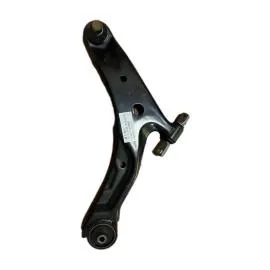
Product: Suspension Lower Control Arm For Hyundai Santa Fe 54501-26000 (Origin: China). To be honest, the fit and finish surprised me—many customers say it installs like OE, with the usual knuckle, subframe, and bushing bolt lineup happening without drama. Highlights: original-matching size, improved stability, noise reduction, and a generally calm steering feel on rough city streets.
| Parameter | Specification (real‑world may vary) |
|---|---|
| OE reference | 54501-26000 |
| Fitment | Hyundai Santa Fe (select applications) |
| Material & finish | High-strength steel, e‑coat black |
| Bushings | Bonded rubber, ≈60–70 Shore A |
| Ball joint | Sealed, pre‑greased |
| Corrosion test | ≥240–500 h salt spray (ASTM B117 / ISO 9227) |
| Durability | Up to ≈120,000–200,000 km typical use |
| Certifications | IATF 16949, ISO 9001 (manufacturer) |
Process flow, testing, and why it matters
From shop-floor notes: material selection → stamping/forging → robotic welding → CNC machining of pivots → shot blast → e‑coat → press-in bushings → ball joint assembly → torque verification → 3D CMM inspection → fatigue bench (up to 1,000,000 articulation cycles) → salt-spray test → packaging with traceability. Standards referenced include ASTM B117 and ISO 9227 for corrosion exposure; quality systems audited to IATF 16949. It sounds dry, but those steps are the difference between a quiet ride and a creak that drives you nuts at every speed bump.
Vendor snapshot (quick comparison)
| Criteria | LKControlArm (this product) | Generic Import A | No‑name B |
|---|---|---|---|
| Material/coating | High-strength steel, e‑coat | Painted mild steel | Unknown |
| Testing | 500 h salt spray; 106 cycles | 96 h; 2×10⁵ cycles | Not published |
| Certifications | IATF 16949 / ISO 9001 | ISO 9001 | None stated |
| Warranty | 24 months | 12 months | 6 months |
Real-world use and feedback
Scenarios: daily commuting with speed humps, ride-hailing fleets that rack up miles, and coastal towns where rust never sleeps. Fleet techs told me alignment holds well after installation, with less brake shimmy on rough pavement. And yes, a worn control arm on a vehicle can mimic bad tires—ask me how many times I chased the wrong squeak.
Customization and sourcing notes
- Rubber hardness tuning (comfort vs. precision)
- Coating upgrades for coastal use (e.g., higher salt-spray hours)
- Private labeling and kit packaging with bolts/nuts
Lead times are generally 7–20 days in stock; custom runs need a bit more runway. For installers: always torque bushings at ride height and book an alignment. A fresh control arm on a vehicle deserves proper geometry.
Mini case studies
• Taxi fleet, humid port city: switched to e‑coat version; reported zero red rust at 12 months and fewer clunks over speed bumps. • Independent shop: preferred sealed ball joints to cut comebacks; customer notes “steers straighter, less chatter” after tire rotation—simple wins.
Trends to watch
More aluminum arms in premium segments, but steel with better coatings still dominates value play. Data-driven QC (CMM scans, lot traceability) is becoming the baseline. Honestly, that’s good news for anyone who hates doing the same job twice.