

Guide to Extended Upper Control Arms for Lifted Truck Suspension
The Ultimate Guide to Extended Upper Control Arms for Lifted Trucks
When upgrading a vehicle's suspension for off-road performance, maintaining proper geometry is the most critical factor for safety and handling. Installing extended upper control arms is essential for anyone lifting their truck or SUV, as standard arms often fail to provide the necessary clearance and alignment correction. Without these specialized components, drivers often experience severe ride stiffness, accelerated tire wear, and poor steering response. In this comprehensive guide, we will explore how these components transform your vehicle's dynamics and why they are a non-negotiable upgrade for serious enthusiasts.
How Extended Upper Control Arms Improve Suspension Geometry
When a vehicle is lifted, the angle of the factory control arms becomes too steep, which restricts the movement of the suspension and pushes the ball joints to their absolute limit. High-quality extended upper control arms are engineered to correct this angle. By altering the mounting points and extending the arm's reach, they bring the ball joint back into a more natural operating range. This results in a significant increase in suspension travel and a more predictable ride quality. Furthermore, they provide the necessary space to accommodate larger, oversized tires without rubbing against the chassis during sharp turns.
Pro Tip: Proper geometry doesn't just feel better; it protects your investment. Corrected angles prevent the premature failure of ball joints and bushings, saving you hundreds of dollars in long-term maintenance.
Key Benefits of Upgrading to Extended Arms
Upgrading your suspension is about more than just looks; it's about functionality. The primary advantage of utilizing extended upper control arms is the restoration of the caster angle. Caster is vital for straight-line stability; if it's too low, your truck will feel "darty" and unstable at highway speeds. Additionally, these arms are often constructed from high-strength alloys or forged steel, providing far more durability than the stamped steel found in OEM parts. This makes them ideal for heavy-duty off-roading, towing, and navigating rocky terrain where strength is paramount.
Performance Gains:
• Optimized Caster: Improved steering return and highway stability
• Increased Clearance: Allows for 35" to 37" tires with less rubbing
• Greater Articulation: Better tire-to-ground contact on uneven trails
• Enhanced Durability: Resistant to bending under extreme loads
OEM vs. Extended Upper Control Arms: A Direct Comparison
Many owners wonder if they can simply use factory arms with a lift kit. The reality is that factory arms are designed for a specific height. Once you exceed a 2-inch lift, the factory components are pushed beyond their design limits. By switching to extended upper control arms, you eliminate the mechanical stress that leads to "binding" in the suspension. The following table illustrates the stark difference between sticking with stock components and upgrading to professional extended arms.
Material Specifications for Extended Arms
Not all extended upper control arms are created equal. The materials used in fabrication dictate the lifespan and strength of the part. Professional-grade arms typically utilize T6-6061 Billet Aluminum for a balance of weight and strength, or Forged Steel for maximum durability in extreme rock-crawling scenarios. Additionally, the type of bushings—whether rubber, polyurethane, or pressable greaseable joints—determines how much vibration is transferred into the cabin. Choosing a high-spec arm ensures that the part won't fail under the pressure of heavy off-road loads.
Installation Tips for Extended Upper Control Arms
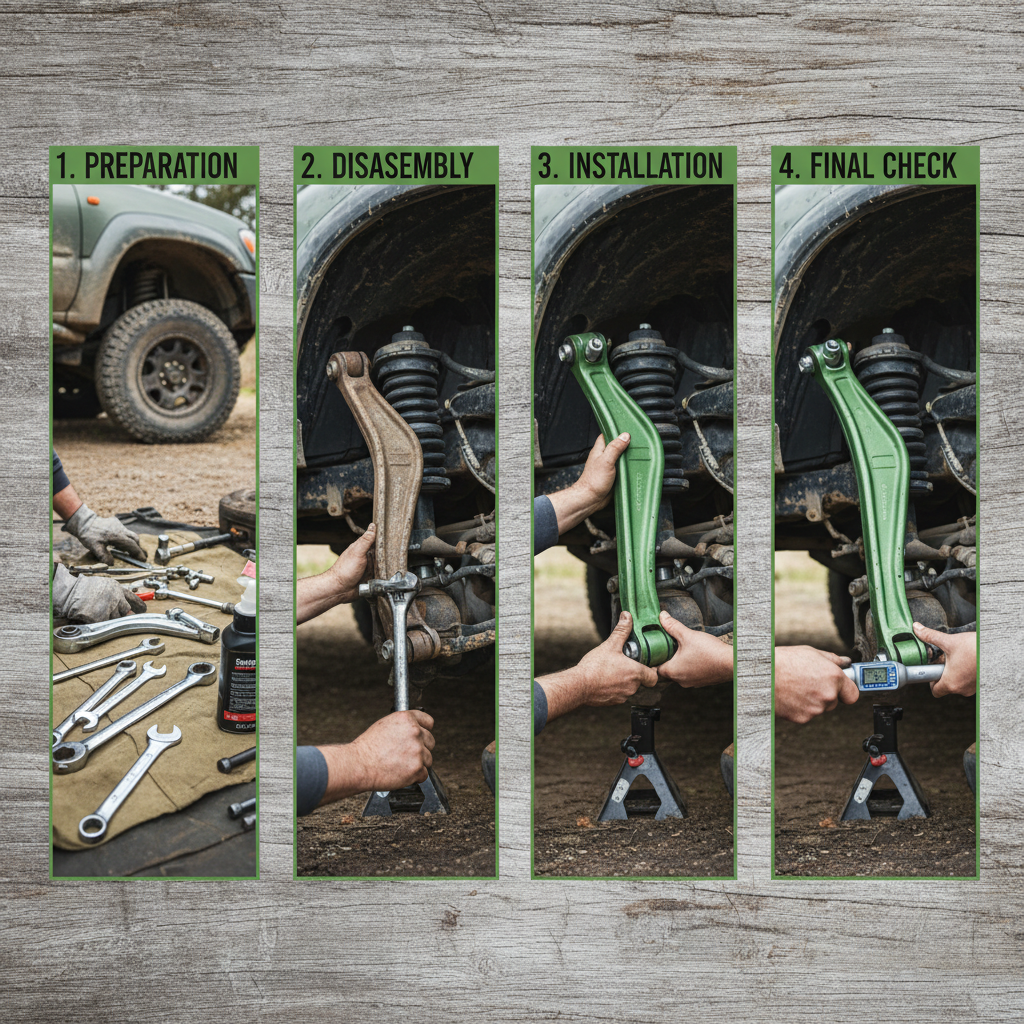
Installing extended upper control arms is a straightforward process for those with basic mechanical knowledge, but precision is key. It is highly recommended to perform the installation while the vehicle is on a lift or high-quality jack stands. One of the most common mistakes is tightening the bolts while the suspension is hanging; instead, always tighten the bushings under load (with the vehicle's weight on the wheels). This prevents the bushings from twisting and premature failure. After installation, a professional alignment is mandatory to set the caster and camber to the manufacturer's ideal specifications.
Choosing the Right Arms for Your Driving Style
Depending on whether you use your truck as a daily driver or a weekend trail rig, your choice of extended upper control arms will vary. For street use and light off-roading, polyurethane bushings offer a great balance of longevity and comfort. For those venturing into extreme terrain, greaseable joints are the way to go, as they allow for maximum articulation without the risk of bushing tear. Always verify the lift height compatibility—some arms are specifically designed for 2-4 inches, while others are tailored for 6 inches or more. Matching the hardware to your lift height ensures the geometry is perfected.
Conclusion: Enhancing Your Ride with Extended Upper Control Arms
Investing in high-quality extended upper control arms is the smartest move any truck owner can make after installing a lift kit. By correcting suspension geometry, improving tire clearance, and enhancing overall durability, these components ensure that your vehicle remains safe and manageable both on the highway and in the wild. Don't settle for a stiff, unstable ride—upgrade your control arms and experience the true potential of your lifted machine.
Frequently Asked Questions (FAQs)
Do I really need extended upper control arms if I only have a 2-inch lift?
While some vehicles can handle a 2-inch lift with factory arms, you may still notice a slight decrease in ride quality or a struggle to get the alignment perfect. If you plan on installing larger tires or doing any off-roading, upgrading to extended arms is highly recommended. It ensures the ball joints operate at a safe angle and prevents the "binding" feeling when the suspension compresses. It is better to install them now than to replace worn-out factory ball joints in six months.
Will these arms stop my tires from rubbing?
Yes, in most cases. Extended upper control arms are designed to push the wheel assembly slightly outward and correct the angle of the axle. This creates more clearance between the tire sidewall and the inner fender or frame. However, tire rub also depends on your wheel offset and tire width. While extended arms significantly reduce rubbing, some extreme setups may still require minor trimming of the plastic inner liners for maximum wheel travel.
How often should I grease my upper control arms?
If you have chosen arms with greaseable fittings (Zerk fittings), you should grease them every 3,000 to 5,000 miles, or after any significant off-road trip involving mud, water, or heavy dust. Regular lubrication flushes out contaminants and ensures the joint moves smoothly, which dramatically extends the life of the component. If you have sealed polyurethane bushings, no greasing is required, but you should still inspect them for wear or cracks during every oil change.
Can I install extended upper control arms myself?
Yes, they are designed as "bolt-on" replacements for your factory arms. However, you will need a few specialized tools, such as a high-torque wrench, a ball joint separator, and a secure way to lift the vehicle. The most critical part of the DIY process is ensuring the bolts are tightened only when the vehicle is sitting on its own weight. If you are uncomfortable with suspension work, we recommend visiting a professional shop to ensure safety and a proper alignment after the install.