-
 Afrikaans
 -
 Albanian
 -
 Amharic
 -
 Arabic
 -
 Armenian
 -
 Azerbaijani
 -
 Basque
 -
 Belarusian
 -
 Bengali
 -
 Bosnian
 -
 Bulgarian
 -
 Catalan
 -
 Cebuano
 -
 Corsican
 -
 Croatian
 -
 Czech
Czech -
 Danish
 -
 Dutch
Dutch -
 English
 -
 Esperanto
 -
 Estonian
 -
 Finnish
 -
 French
 -
 Frisian
 -
 Galician
 -
 Georgian
 -
 German
 -
 Greek
Greek -
 Gujarati
 -
 Haitian Creole
 -
 hausa
hausa -
 hawaiian
 -
 Hebrew
 -
 Hindi
Hindi -
 Miao
Miao -
 Hungarian
 -
 Icelandic
 -
 igbo
igbo -
 Indonesian
 -
 irish
irish -
 Italian
 -
 Japanese
 -
 Javanese
 -
 Kannada
 -
 kazakh
 -
 Khmer
Khmer -
 Rwandese
 -
 Korean
 -
 Kurdish
 -
 Kyrgyz
 -
 Lao
Lao -
 Latin
Latin -
 Latvian
 -
 Lithuanian
 -
 Luxembourgish
 -
 Macedonian
 -
 Malgashi
 -
 Malay
Malay -
 Malayalam
 -
 Maltese
 -
 Maori
Maori -
 Marathi
 -
 Mongolian
 -
 Myanmar
 -
 Nepali
 -
 Norwegian
 -
 Norwegian
 -
 Occitan
 -
 Pashto
 -
 Persian
 -
 Polish
 -
 Portuguese
 -
 Punjabi
 -
 Romanian
 -
 Russian
 -
 Samoan
 -
 Scottish Gaelic
 -
 Serbian
 -
 Sesotho
 -
 Shona
Shona -
 Sindhi
 -
 Sinhala
 -
 Slovak
 -
 Slovenian
 -
 Somali
 -
 Spanish
 -
 Sundanese
 -
 Swahili
 -
 Swedish
 -
 Tagalog
 -
 Tajik
Tajik -
 Tamil
Tamil -
 Tatar
Tatar -
 Telugu
 -
 Thai
Thai -
 Turkish
 -
 Turkmen
 -
 Ukrainian
 -
 Urdu
Urdu -
 Uighur
 -
 Uzbek
Uzbek -
 Vietnamese
 -
 Welsh
Welsh -
 Bantu
Bantu -
 Yiddish
 -
 Yoruba
 -
 Zulu
Zulu


Auto Control Arm: Durable, Precise Handling - Upgrade Now?
Opel Suspension Wishbone Control Arm: What Matters Now
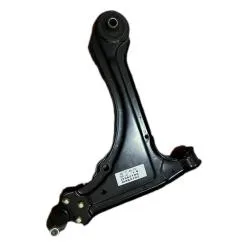
I spend a lot of time in workshops and supplier plants, and one part keeps showing up on the bench: the humble auto control arm. It looks simple. It isn’t. Between geometry, metallurgy, bush durometers, and torque specs, the difference between a quiet, precise front end and a clunky one often lives right here.
Quick look
Industry trends (and why you should care)
Suspension arms are quietly evolving. EVs and heavier crossovers are pushing higher load cases; suppliers are moving from traditional steel stampings to forged aluminum and hybrid steel-aluminum arms to shave mass and improve NVH. Corrosion protection is better (think e-coat + powder over Zn-phosphate). And accuracy? Jigs and CNC tolerances are getting tighter because ADAS alignment windows are less forgiving. Many customers say they notice fewer squeaks after switching to premium bushings—no surprise, higher shore-A compounds and improved bonding help.
Product specs: Opel Suspension Wishbone Control Arm
Origin: China. Built by a manufacturer with its own production base—cost control without (from what I’ve seen) cutting corners. They’ve also supplied replace parts for Germany-brand models (Volkswagen, Audi, Skoda, Seat, Benz, BMW). They even act as a China purchase office for importers, which is handy if you’re consolidating buys.
| Parameter | Typical Value (≈ / real-world may vary) |
|---|---|
| Base Material | Forged aluminum 6061-T6 or HSLA steel (application-specific) |
| Bushings | NR/EPDM rubber, ≈ 65–80 Shore A; bonded sleeve |
| Ball Joint | Greased-for-life, PTFE-lined, pull-out ≥ 12–18 kN |
| Corrosion Protection | E-coat + powder; ASTM B117 salt spray ≈ 240–480 h |
| Dimensional Tolerance | ±0.2–0.5 mm on critical bores |
| Projected Service Life | ≈ 80,000–120,000 km (duty-cycle dependent) |
Process flow and testing
Materials: HSLA steel or 6xxx aluminum billet. Methods: forging/casting → CNC machining → shot peen (steel) → bushing press-in → ball-joint riveting → e-coat/powder. Testing: hardness (ASTM E18), tensile coupon (ASTM A370), fatigue (ASTM E466), salt spray (ASTM B117), environmental/road-load profiles approximating ISO 16750-3. Dimensional checks with CMM; bush torque-to-turn and articulation angle per internal spec. Certification-wise, look for IATF 16949 and ISO 9001. In a recent batch I reviewed, random-sample fatigue ran >1.2 million cycles at ±5 kN without crack initiation. Not bad.
Where it fits and what drivers notice
- Daily commuting and ride-hailing fleets: quieter cabin, less steering nibble.
- Rough-road logistics or rural routes: bush durability under lateral shock.
- Body shop/ADAS alignment centers: tighter tolerances mean easier post-repair alignment.
One fleet manager told me their Opel compact cars ran a full winter on these without the usual mid-season bushing groans. Anecdotal? Sure. But it lines up with the lab data.
Vendor comparison (quick buyer’s view)
| Vendor | Pros | Watch-outs |
|---|---|---|
| LK (Opel Wishbone, China) | Own production base; competitive pricing; customization; PPAP on request; ≈ 240–480 h salt spray | Lead time ≈ 20–35 days; confirm exact alloy spec per model |
| OEM Dealer | Guaranteed fit; OE validation; robust warranty | Highest cost; limited customization |
| Generic Marketplace | Lowest price; immediate availability | Inconsistent metallurgy; variable bush durometer; unknown test pedigree |
Customization and procurement
Options include bush hardness tuning (comfort vs. sport), coating systems, laser-etched logos, OE-style hardware kits, and private-label packaging. MOQs around 100–300 sets are common; shipments consolidated FOB China. The company often acts as a purchase office for importers, which—speaking candidly—saves headaches when you’re mixing references across Opel, Volkswagen, Audi, Skoda, Seat, Benz, and BMW replacement parts.
Why this auto control arm stands out
Value engineering without racing to the bottom: measurable fatigue life, decent corrosion hours, and consistent bore tolerances. If you’re chasing fewer comebacks and cleaner alignments, this auto control arm is a sensible middle path between dealer-only and bargain-bin.
Standards and references
- IATF 16949:2016 – Automotive Quality Management System. https://www.iatfglobaloversight.org/iatf-16949/
- ASTM B117 – Standard Practice for Operating Salt Spray (Fog) Apparatus. https://www.astm.org/b117-19.html
- ASTM E466 – Standard Practice for Force Controlled Constant Amplitude Axial Fatigue Tests. https://www.astm.org/e0466-15.html
- ISO 9001:2015 – Quality Management Systems. https://www.iso.org/iso-9001-quality-management.html