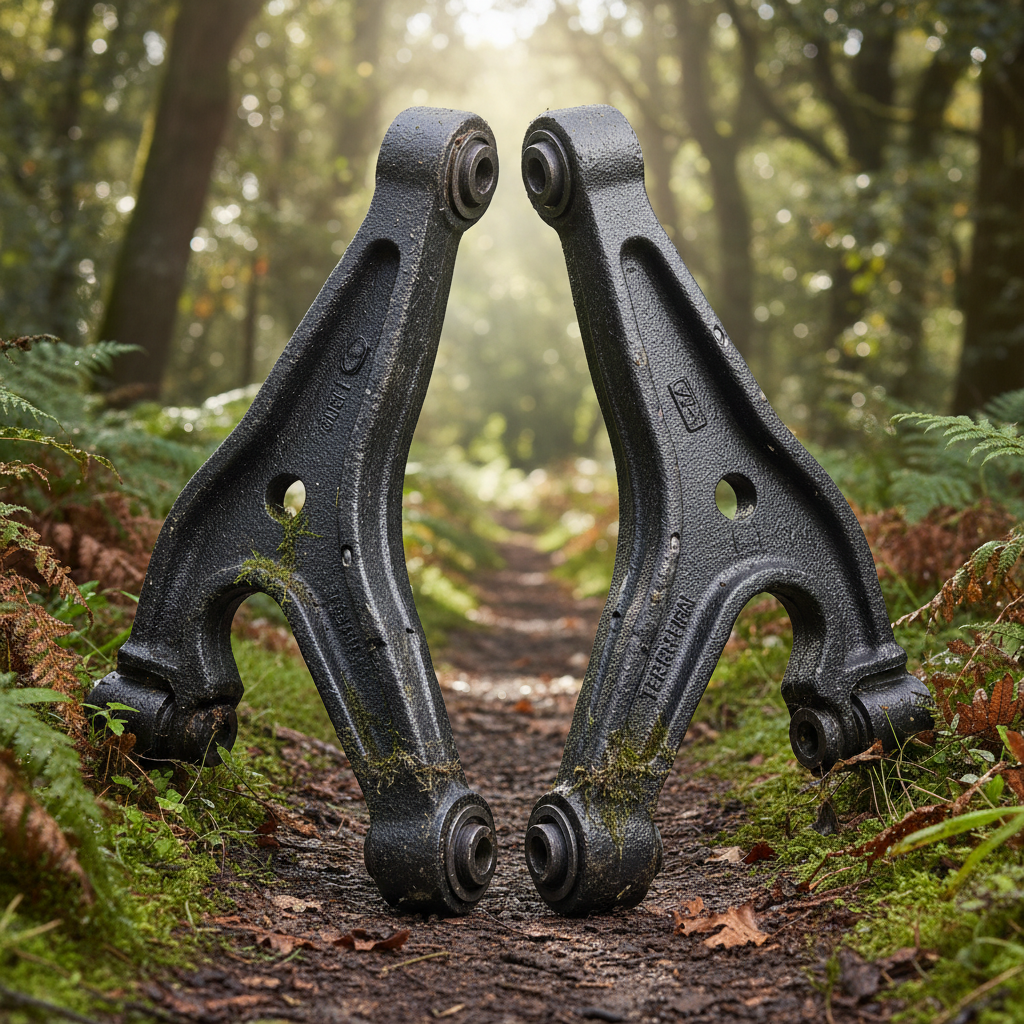
The controller arm is a critical component in numerous industrial and automotive applications, ensuring precise and reliable vehicle handling. Its primary function is to connect the wheel assembly to the vehicle’s chassis, enabling steering and suspension movement. Understanding the intricacies of controller arms is paramount for automotive engineers, mechanics, and enthusiasts alike, as their performance directly impacts vehicle safety, handling, and overall driving experience. This knowledge is not confined to the automotive industry; principles of mechanical linkages and structural integrity inherent in controller arm design find applications in robotics, aerospace, and various other engineering fields.
Globally, the automotive industry represents a multi-trillion dollar market, with vehicle production exceeding 90 million units annually (source: OICA - International Organization of Motor Vehicle Manufacturers). Controller arms are an indispensable part of every vehicle, leading to a continuous demand for improved designs and materials. ISO standards, such as ISO/TS 16949, play a critical role in maintaining quality control and ensuring the reliability of these components throughout the supply chain. The increasing demand for electric vehicles and advanced driver-assistance systems (ADAS) further emphasizes the need for high-performance controller arms capable of handling increased loads and ensuring precise steering control.
A key challenge within the automotive industry, and specifically relating to controller arm design, is balancing performance, cost, and durability. Frequent road conditions and vehicle usage lead to wear and tear on suspension components. Consequently, manufacturers are constantly innovating to develop controller arms that offer extended lifespan, reduced weight, and enhanced safety features, addressing a widespread need for reliable and cost-effective automotive components.
Introduction to Controller Arms
The foundation of vehicle handling lies within the suspension system, and the controller arm plays a pivotal role in this system. It’s more than just a connecting link; it’s a complex component designed to withstand significant stress, transmit steering forces, and maintain wheel alignment. The design and manufacturing of these arms have evolved significantly over the years, incorporating advanced materials and engineering techniques to improve performance and durability.
Understanding the basic function and the different types of controller arms—such as upper and lower control arms—is crucial for anyone involved in vehicle maintenance, repair, or modification. These components are subject to various forces during operation, including compression, tension, and bending, making material selection and structural design critical considerations.
Defining the Controller Arm
A controller arm, also known as a suspension arm or A-arm, is a crucial part of a vehicle's suspension system. It's a hinged suspension link that connects the vehicle’s wheel and axle to its chassis. Its primary purpose is to allow the wheel to move up and down while maintaining its position relative to the vehicle’s body, providing a smooth and controlled ride. It enables steering and allows the suspension to absorb road impacts, enhancing ride comfort and handling.
In modern industry, the need for precise and robust mechanical linkages is ever-present. The principles behind controller arm design are directly applicable to robotic arms, aircraft landing gear, and other complex mechanical systems requiring precise movement and load-bearing capacity. The focus on lightweight materials and high-strength designs in the automotive sector has driven innovation in materials science and manufacturing processes, benefitting these other industries as well.
The evolution of the controller arm directly mirrors advancements in automotive engineering. From the simpler designs of early vehicles to the sophisticated multi-link systems used today, continuous refinement focuses on improving ride quality, handling characteristics, and overall vehicle safety.
Key Factors of Controller Arm Performance
Several key factors contribute to the performance and reliability of a controller arm. Firstly, Durability is paramount. These components are subjected to constant stress and harsh environmental conditions, requiring robust materials and construction techniques to resist fatigue, corrosion, and wear. Secondly, Material Selection plays a critical role. Steel alloys, aluminum, and increasingly, composite materials are used, each offering different strengths and weaknesses depending on the application.
Precision and Alignment are crucial for optimal handling and tire wear. Controller arms must maintain precise geometry and alignment throughout their operational range. Any deviation can lead to uneven tire wear, compromised steering, and reduced vehicle stability. Fourthly, Weight Reduction is a significant focus. Lighter controller arms improve vehicle fuel efficiency and handling by reducing unsprung mass. This is achieved through optimized designs and the use of lightweight materials.
Finally, Bushings and Ball Joints are integral to the controller arm's function. These components absorb vibrations and allow for articulation, but are also subject to wear and tear. High-quality bushings and ball joints are essential for maintaining precise control and minimizing noise and vibration. Selecting the appropriate bushing material (rubber, polyurethane, etc.) is key to balancing comfort and performance.
Global Applications of Controller Arms
The applications of controller arms are primarily concentrated in the automotive industry, where they are used in virtually all passenger vehicles, trucks, and buses. However, the principles of their design and function extend to other sectors. In post-disaster relief operations, robust off-road vehicles equipped with durable controller arms are crucial for navigating challenging terrain and delivering aid.
In remote industrial zones, such as mining operations and construction sites, heavy-duty vehicles relying on strong and reliable controller arms are essential for transporting materials and equipment. The Asia-Pacific region, with its rapidly growing automotive market, represents a significant demand center for these components. Europe remains a hub for advanced automotive engineering and innovative controller arm designs.
Moreover, the design concepts used in controller arms are adapted for use in agricultural machinery, robotics (particularly in robotic arms designed for precision tasks), and even aerospace applications such as landing gear mechanisms. The demand for high-performance suspension systems is increasing globally, driven by stricter safety regulations and consumer expectations for a comfortable and controlled driving experience.
Controller Arm Performance Comparison
Advantages and Long-Term Value
Investing in high-quality controller arms delivers a range of tangible benefits. Firstly, reduced maintenance costs due to increased durability and extended lifespan. Secondly, improved vehicle safety by maintaining precise steering control and stability. Thirdly, enhanced ride comfort thanks to optimized vibration damping and suspension performance. From a cost perspective, although initial investment may be higher, the long-term savings associated with reduced repairs and replacements contribute to significant overall value.
From a sustainability perspective, durable controller arms reduce the need for frequent replacements, lessening the environmental impact associated with manufacturing and disposal. The emotional benefit lies in the peace of mind knowing that your vehicle is equipped with reliable components, ensuring safety and a comfortable driving experience. This fosters trust in the vehicle and its manufacturer.
Future Trends in Controller Arm Technology
The future of controller arm technology is closely tied to advancements in materials science, automation, and the evolving automotive landscape. We are seeing increasing adoption of lightweight composite materials like carbon fiber reinforced polymers (CFRP) to reduce weight and enhance performance. Furthermore, the integration of smart sensors and active suspension systems will allow for real-time adjustment of damping and stiffness, optimizing ride quality and handling.
Digital twins – virtual representations of physical components – are also becoming increasingly important for designing and testing controller arms, enabling engineers to optimize designs and predict performance under various conditions. These digital simulations minimize the need for costly physical prototypes and accelerate the development process. The shift towards electric vehicles (EVs) is also driving innovation in controller arm design, as EVs often require different suspension characteristics due to their weight distribution and torque delivery.
Challenges and Solutions in Controller Arm Development
Despite significant progress, several challenges remain in controller arm development. One key challenge is balancing cost with performance, particularly as demand for advanced materials and technologies increases. Another challenge is ensuring compatibility with a wide range of vehicle models and suspension configurations. Addressing these challenges requires a holistic approach that considers material selection, manufacturing processes, and system integration.
One solution is to explore innovative manufacturing techniques like additive manufacturing (3D printing), which allows for the creation of complex geometries and customized designs at a relatively low cost. Another solution is to develop modular controller arm designs that can be adapted to different vehicle platforms. Continuous research and development into new materials and technologies are also essential for overcoming these challenges and pushing the boundaries of controller arm performance.
Finally, employing robust testing procedures and quality control measures throughout the manufacturing process is crucial for ensuring reliability and durability, minimizing potential failures and maximizing customer satisfaction.
Summary of Challenges and Potential Solutions for Controller Arm Development
| Challenge |
Impact on Controller Arm |
Potential Solution |
Implementation Cost (1-10) |
| High Material Costs |
Limits use of advanced materials like CFRP |
Explore alternative composite materials; Optimize material usage through design |
6 |
| Complex Geometries |
Difficult to manufacture with traditional methods |
Utilize additive manufacturing (3D printing) |
7 |
| Ensuring Durability |
Controller arms must withstand harsh conditions |
Rigorous testing & quality control; Protective coatings |
5 |
| Compatibility Issues |
Difficulties adapting designs to various vehicle models |
Modular controller arm designs; Standardized interfaces |
4 |
| Weight Reduction |
Impacts fuel efficiency and handling |
Employ lightweight materials (aluminum, composites) |
6 |
| Active Suspension Integration |
Requires advanced sensors & control systems |
Develop integrated sensor systems; Optimize control algorithms |
8 |
FAQS
Controller arms are typically manufactured using steel alloys due to their high strength and durability. However, aluminum alloys are increasingly utilized to reduce weight, improving fuel efficiency and handling. More advanced applications employ composite materials like carbon fiber reinforced polymers (CFRP) for significant weight savings, though at a higher cost. The material selection depends heavily on the vehicle type, performance requirements, and budget considerations.
Controller arms should be inspected regularly, ideally during routine vehicle maintenance (every 12,000-24,000 miles). Look for signs of wear and tear, such as cracked or deteriorated bushings, ball joint play, or visible damage to the arm itself. Replacement is recommended if any significant damage is detected or if excessive play is present, as this can compromise vehicle handling and safety. Driving conditions and mileage significantly influence the lifespan of these components.
Bushings are crucial components that connect the controller arm to the vehicle's chassis and wheel hub. They absorb vibrations, reduce noise, and allow for controlled movement. Worn bushings can cause excessive play, leading to imprecise steering, uneven tire wear, and a compromised ride quality. Different bushing materials (rubber, polyurethane, etc.) offer varying levels of stiffness and durability, influencing ride comfort and handling characteristics.
Controller arms play a vital role in maintaining proper vehicle alignment. They establish the key alignment angles – camber, caster, and toe – which influence steering stability, tire wear, and overall handling. Any bending or damage to a controller arm can disrupt these angles, requiring a wheel alignment to restore optimal performance. Accurate alignment is essential for ensuring safe and efficient vehicle operation.
Performance controller arms often feature upgraded bushings, stronger materials, and optimized geometry to enhance handling and durability. They can improve steering response, reduce body roll, and increase overall stability, particularly in demanding driving conditions. These upgrades are popular among enthusiasts seeking to improve their vehicle's performance on the track or during spirited driving. However, it's important to ensure compatibility with other suspension components.
Yes, a damaged controller arm, particularly one with worn bushings or ball joints, can definitely cause vibrations in your vehicle. These vibrations can be felt in the steering wheel, through the chassis, or even in the seats. This occurs because the damaged component allows for excessive movement and transmits road imperfections directly to the vehicle's frame. Addressing the issue promptly is essential for maintaining ride comfort and preventing further damage.
Conclusion
In conclusion, the controller arm is a fundamentally important component within vehicle suspension systems, impacting safety, handling, and overall driving experience. From its essential role in connecting the wheel to the chassis, to the continuous innovation in materials and designs, the controller arm represents a significant aspect of automotive engineering. Understanding its function, key performance factors, and future trends is critical for professionals and enthusiasts alike.
As the automotive industry evolves towards electric vehicles and advanced driver-assistance systems, the demands on controller arm technology will only increase. Continued research and development, focused on lightweight materials, intelligent suspension systems, and robust manufacturing processes, will be crucial for meeting these challenges and delivering improved performance, reliability, and sustainability. Visit our website at www.lkcontrolarm.com to learn more about our innovative controller arm solutions.