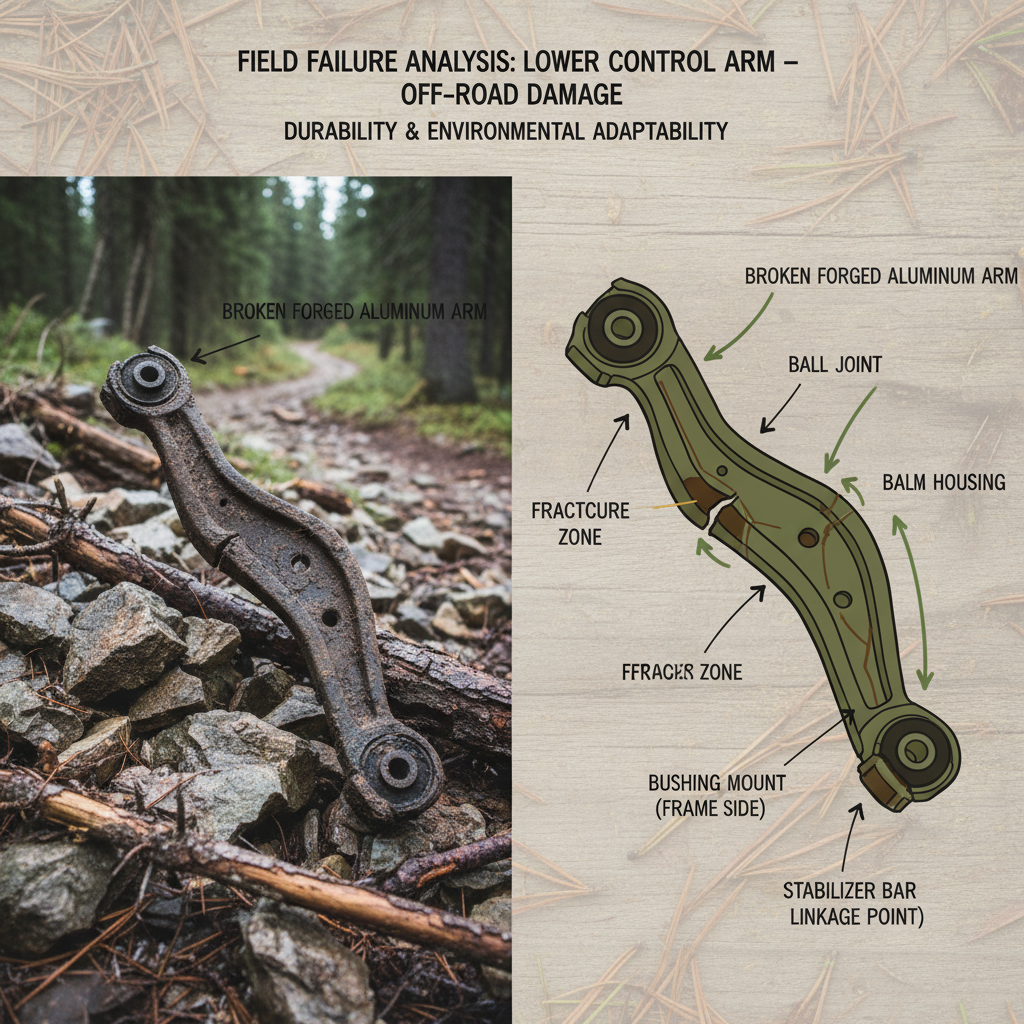
The realm of automotive engineering constantly seeks to enhance vehicle performance and safety. A critical, yet often overlooked component in achieving these goals is the control arm auto. This system, responsible for connecting the chassis to the wheel hub, significantly impacts handling, stability, and ride comfort. Understanding its intricacies is paramount for automotive professionals, enthusiasts, and anyone interested in the mechanics of modern vehicles. Proper function of the control arm auto ensures optimal tire contact with the road surface, allowing for precise steering and predictable responses.
Globally, the automotive industry is undergoing rapid transformation, driven by factors like electrification, autonomous driving, and increasing safety regulations. Within this landscape, the demand for high-quality, durable, and precisely engineered control arm auto components is steadily growing. The United Nations estimates over 1.35 million road fatalities annually, highlighting the critical need for vehicle systems that enhance safety and control. Investing in robust control arm auto designs is thus not just an engineering challenge, but a public safety imperative.
The market for automotive suspension components, including control arms, is projected to reach substantial growth in the coming years. This growth is fueled by increasing vehicle production, particularly in emerging economies, and the rising adoption of advanced suspension technologies.
The Significance of Control Arm Auto
The control arm auto is the pivotal link between the vehicle's chassis and its wheel assembly. Without a properly functioning control arm, steering precision and ride quality are severely compromised. This component directly influences the vehicle's ability to maintain stable contact with the road, especially during cornering, braking, and acceleration.
Modern control arm auto designs are increasingly sophisticated, incorporating advanced materials and geometries to optimize performance and minimize weight. Understanding the nuances of these designs is crucial for mechanics, engineers, and automotive enthusiasts alike. A well-designed and maintained control arm auto contributes to a safer and more enjoyable driving experience.
Defining Control Arm Auto
Simply put, a control arm auto is a suspension component that connects the vehicle’s wheel hub to its frame. Its primary function is to allow the wheel to move up and down while maintaining its position relative to the vehicle’s body. Different types of control arm auto exist, including upper and lower control arms, each playing a distinct role in the overall suspension system.
The evolution of the control arm auto reflects the broader advancements in automotive engineering. Early suspension systems were relatively simple, but as vehicles became faster and more sophisticated, the need for more precise and responsive control arms became apparent. Today's control arm auto designs often incorporate complex geometries and advanced materials to optimize performance.
The control arm auto is integral to a vehicle's handling characteristics, directly influencing its responsiveness, stability, and comfort. A failing control arm auto can lead to uneven tire wear, poor alignment, and compromised vehicle safety.
Key Components and Materials
Control arms are not single pieces; they consist of several crucial components. These include the control arm bushing, ball joints, and the arm itself. The bushing, typically made of rubber or polyurethane, reduces vibration and noise while allowing for controlled movement. Ball joints enable the wheel to swivel for steering. The arm itself is traditionally constructed from steel, but increasingly, lightweight materials like aluminum are being used.
The choice of material significantly impacts the control arm’s durability, weight, and performance. Steel offers high strength and rigidity but is heavier. Aluminum provides a lighter weight alternative, enhancing vehicle efficiency, but may require more complex designs to maintain equivalent strength. Modern composite materials are also gaining traction, offering a balance of lightweight and strength.
The design and quality of each component are critical for the overall performance and longevity of the control arm auto. Premium bushings offer superior vibration damping and durability, while high-quality ball joints ensure smooth and precise steering. Maintaining these components through regular inspection and replacement is essential for vehicle safety.
Durability and Performance Metrics
Assessing the durability and performance of a control arm auto involves several key metrics. These include fatigue strength, tensile strength, and resistance to corrosion. Fatigue strength indicates the component's ability to withstand repeated stress cycles, while tensile strength measures its resistance to breaking under tension.
Manufacturers employ rigorous testing procedures, including finite element analysis (FEA) and physical stress testing, to evaluate control arm auto performance. These tests simulate real-world driving conditions, identifying potential weak points and ensuring the component meets stringent safety standards.
Control Arm Auto Performance Metrics Comparison
Global Applications in Automotive Industries
Control arm auto systems are universally employed across the global automotive industry, from passenger vehicles to heavy-duty trucks and buses. Major automotive manufacturing hubs in countries like Germany, Japan, the United States, and China are significant consumers of these components.
Beyond standard production vehicles, control arm auto technology is also crucial in specialized automotive applications, such as motorsports and off-road vehicles. These applications demand enhanced durability and performance, driving innovation in control arm auto design and materials.
Advantages of Advanced Control Arm Auto Systems
Advanced control arm auto systems offer numerous benefits, including improved handling, increased stability, and enhanced ride comfort. Lightweight designs contribute to better fuel efficiency and reduced emissions. Furthermore, advanced materials provide increased durability and resistance to wear and tear.
These improvements translate to a safer and more enjoyable driving experience. Precise steering control and predictable handling inspire driver confidence, while a comfortable ride reduces fatigue on long journeys. Investing in high-quality control arm auto components is an investment in vehicle performance and driver well-being.
The enhanced precision afforded by modern control arms also allows for more effective implementation of advanced driver-assistance systems (ADAS) and autonomous driving technologies, ensuring optimal vehicle control and responsiveness.
Future Trends and Technological Advancements
The future of control arm auto technology is focused on further enhancing performance, reducing weight, and improving durability. Research and development are exploring the use of new materials, such as carbon fiber composites and advanced alloys, to create even lighter and stronger control arms.
Smart control arm auto systems, incorporating sensors and active damping technologies, are also emerging. These systems can dynamically adjust to changing road conditions, optimizing ride comfort and handling in real-time. Additive manufacturing (3D printing) is poised to revolutionize control arm auto production, enabling the creation of complex geometries and customized designs.
The integration of artificial intelligence (AI) and machine learning (ML) will enable predictive maintenance, identifying potential failures before they occur and minimizing downtime. These advancements promise to significantly improve the performance, safety, and reliability of future vehicles.
Summary of Future Control Arm Auto Technologies
| Technology |
Material Innovation |
Performance Impact |
Implementation Timeline |
| Carbon Fiber Composites |
Reduced Weight, Increased Strength |
Improved Handling and Fuel Efficiency |
5-10 Years |
| Active Damping Systems |
Real-Time Adjustment, Enhanced Comfort |
Optimized Ride Quality and Stability |
3-5 Years |
| 3D Printing |
Customizable Designs, Reduced Waste |
Improved Performance, Faster Prototyping |
2-5 Years |
| Advanced Alloy Materials |
Increased Strength and Durability |
Longer Lifespan, Reduced Maintenance |
5-10 Years |
| Sensor Integration |
Real-Time Monitoring, Predictive Maintenance |
Improved Safety and Reliability |
3-7 Years |
| AI-Powered Control Systems |
Adaptive Control, Optimized Performance |
Enhanced Handling and Stability |
7-10 Years |
FAQS
Several symptoms can indicate a failing control arm auto. These include clunking noises over bumps, uneven tire wear, steering wheel vibrations, and difficulty maintaining proper alignment. A visual inspection of the bushings for cracks or wear can also be revealing. Ignoring these signs can lead to more serious suspension damage and compromised vehicle safety.
Control arms should be inspected at least once a year during routine vehicle maintenance. However, if you notice any of the symptoms mentioned above, it's essential to have them checked immediately. Regular inspections can help identify minor issues before they escalate into costly repairs or safety hazards. Also, consider inspection after hitting significant road imperfections or experiencing a collision.
Upper and lower control arms serve different functions within the suspension system. The lower control arm typically provides the primary mounting point for the wheel hub and bears the vehicle's weight. The upper control arm helps control wheel movement and maintain alignment. They work in tandem to ensure optimal handling and stability, and often fail at different rates depending on driving conditions.
Replacing a control arm auto can be a complex task requiring specialized tools and knowledge. While experienced DIY mechanics may attempt it, it's generally recommended to have it done by a qualified professional. Incorrect installation can compromise vehicle safety and lead to further damage. Proper alignment after replacement is crucial and often requires specialized equipment.
Traditionally, control arms are constructed from steel due to its strength and affordability. However, modern vehicles increasingly utilize aluminum to reduce weight and improve fuel efficiency. High-performance applications are seeing increased use of lightweight composites like carbon fiber. The choice of material impacts the cost, weight, and overall performance of the control arm auto.
Worn control arm bushings or ball joints can cause significant changes in wheel alignment. This leads to uneven tire wear, pulling to one side during braking or steering, and reduced handling precision. Regular alignment checks and control arm inspections are vital to maintaining optimal vehicle performance and safety. The control arm auto plays a critical role in the suspension geometry, so wear impacts alignment significantly.
Conclusion
In conclusion, the control arm auto is a foundational component of modern vehicle suspension systems, profoundly impacting handling, safety, and ride comfort. From its basic function of connecting the chassis to the wheel hub to its increasingly sophisticated designs incorporating advanced materials and technologies, the control arm auto continues to evolve. Understanding its intricacies is crucial for anyone involved in the automotive industry, from engineers and mechanics to enthusiasts and everyday drivers.
Looking ahead, innovation in materials, sensor integration, and AI-powered control systems will further enhance the performance and reliability of control arm auto technology. Continued research and development will be essential to meet the demands of increasingly complex and automated vehicles. For more information and to explore our range of high-quality control arm auto components, visit our website: www.lkcontrolarm.com.