

Tubular Control Arms: Enhance Performance & Handling
The Engineered Advantage of Tubular Control Arms in Modern Industrial Applications
In the realm of advanced vehicle suspension systems and industrial machinery, the integrity and performance of critical components are paramount. Among these, tubular control arms stand out as a superior choice, offering unparalleled strength, reduced weight, and enhanced durability. These components are meticulously designed to optimize suspension geometry, improve handling characteristics, and withstand extreme operational stresses across a diverse array of demanding environments. Their construction, typically from high-strength steel or aluminum alloys, allows for precise control over wheel alignment and movement, which is critical for both safety and performance in high-stakes applications.
This article delves into the intricate world of tubular control arms, exploring their manufacturing excellence, technical specifications, diverse application scenarios, and the profound advantages they bring to industries ranging from high-performance automotive to heavy-duty industrial operations. We will also examine critical selection criteria, customization capabilities, and real-world case studies to provide a comprehensive understanding for B2B decision-makers and engineering professionals.
Precision Manufacturing Process Flow for Tubular Control Arms
The production of high-quality tubular control arms is a sophisticated process that integrates advanced materials science with precision engineering. Adherence to stringent international standards such as ISO 9001 and ANSI specifications ensures consistent quality, reliability, and extended service life. The typical manufacturing process involves several critical stages:
1. Material Selection & Sourcing
High-strength alloy steels (e.g., 4130 Chromoly, DOM steel) or aerospace-grade aluminum alloys are selected for their exceptional strength-to-weight ratio, fatigue resistance, and corrosion properties. Material certificates confirm chemical composition and mechanical properties.
2. Precision Cutting & Bending
Tubes are cut to exact lengths using CNC laser or saw technology. Advanced rotary draw bending or press bending techniques are employed to achieve precise geometric configurations without compromising material integrity or creating stress points.
3. Welding & Fabrication
Components are assembled and welded using TIG (Tungsten Inert Gas) or MIG (Metal Inert Gas) processes. Certified welders ensure full penetration and minimal heat-affected zones, preventing material degradation. Fixtures maintain dimensional accuracy throughout.
4. Heat Treatment (if applicable)
For certain alloys, post-weld heat treatment (e.g., normalizing, stress relieving, or age hardening) is applied to restore or enhance mechanical properties, such as ductility and impact resistance, and to eliminate residual stresses.
5. Machining & Bushing Installation
CNC machining ensures precise bore and mounting point dimensions. High-performance bushings (e.g., polyurethane, spherical bearings) are pressed in, providing articulation and vibration damping.
6. Surface Finishing & Coating
Surface treatments like powder coating, E-coating, or zinc plating provide exceptional corrosion resistance, crucial for longevity in harsh environments typical of petrochemical or water supply & drainage industries, extending service life significantly.
7. Quality Control & Testing
Each unit undergoes rigorous testing, including dimensional inspection, non-destructive testing (NDT) for weld integrity (e.g., magnetic particle, ultrasonic), fatigue testing, and load-bearing stress analysis. Compliance with ISO/TS 16949 is critical for automotive applications.
This meticulous process ensures that each control arm delivers peak performance and reliability. For instance, in the petrochemical industry, the corrosion resistance achieved through advanced coatings translates directly into reduced maintenance downtime and enhanced operational safety. In metallurgy, the superior structural integrity of tubular control arms contributes to the stability and precision of heavy machinery, preventing premature wear and tear.
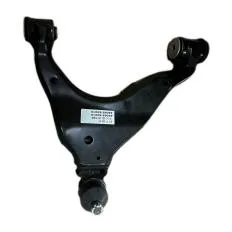
Technical Specifications and Industry Standards for Control Arms
Understanding the technical parameters of tubular control arms is crucial for ensuring compatibility, performance, and compliance in industrial and automotive applications. Key specifications define the material properties, dimensional accuracy, and performance under various loads.
Product Specification: Toyota Overlord 120 Compatible Tubular Control Arm
| Parameter | Specification | Standard / Test Method |
|---|---|---|
| Material | DOM (Drawn Over Mandrel) Steel Tubing, 4130 Chromoly (Optional) | ASTM A513, AISI 4130 |
| Tensile Strength | Min. 550 MPa (80,000 psi) | ASTM E8 / ISO 6892-1 |
| Yield Strength | Min. 450 MPa (65,000 psi) | ASTM E8 / ISO 6892-1 |
| Wall Thickness | 3.0 mm - 5.0 mm (0.12" - 0.20") | Dimensional Metrology |
| Corrosion Resistance | > 500 hours Salt Spray (Red Rust) | ASTM B117 / ISO 9227 |
| Fatigue Life (Load Cycle) | > 500,000 Cycles @ Rated Load | SAE J253 / ISO 12107 |
| Welding Standard | AWS D1.1 / ISO 3834 | Certified Welders, NDT Inspection |
| Bushing Material | Polyurethane (90A Durometer) / Spherical Bearings (PTFE Lined) | ASTM D2240 |
| Surface Finish | Durable Powder Coat (Black, Grey, Blue) | ASTM D3359 |
These specifications underscore the robust engineering behind modern control arms, ensuring they meet the rigorous demands of their intended applications, including compatibility with vehicles like the Toyota Overlord 120, where precise fitment and superior performance are non-negotiable.
Industry Trends and Advantages of Advanced Control Arm Designs
The industry for advanced suspension components is continuously evolving, driven by demands for greater efficiency, performance, and durability. Current trends highlight the increasing adoption of lightweight yet incredibly strong designs, pushing the boundaries of material science and manufacturing. The shift towards optimizing vehicle dynamics and reducing unsprung mass is paramount, particularly for commercial and performance-oriented applications.
Tubular control arms, including advanced tubular lower control arms and innovative spindle source upper control arms, embody these trends by offering several distinct advantages:
- Superior Strength-to-Weight Ratio: By utilizing tubular construction, these arms achieve significant weight reductions compared to traditional stamped or cast designs, without sacrificing strength. This translates to reduced unsprung mass, improving suspension response, handling, and fuel efficiency (energy saving).
- Enhanced Durability and Fatigue Resistance: The optimized geometry and material selection for tubular designs provide exceptional resistance to bending, twisting, and fatigue, leading to a longer service life even under extreme load cycles.
- Improved Suspension Geometry: Precision-engineered tubular arms allow for finer control over camber, caster, and toe angles, leading to improved tire contact patch, enhanced cornering stability, and more predictable handling characteristics.
- Corrosion Resistance: With multi-stage finishing processes, including E-coating and powder coating, these components offer superior protection against environmental factors, making them ideal for corrosive industrial settings or regions with harsh weather conditions.
- Modularity and Customization: The design flexibility of tubular construction allows for easier integration of different bushing types, ball joint configurations, and custom lengths, catering to highly specific application requirements.
These inherent advantages ensure that investing in high-quality tubular control arms translates into significant operational benefits, from reduced maintenance costs to enhanced safety and performance across various industrial and automotive platforms.
Application Scenarios and Target Industries
The robust design and superior performance of tubular control arms make them indispensable across a wide spectrum of industries and application scenarios. Their ability to manage significant loads, resist environmental degradation, and enhance dynamic control positions them as a critical component in demanding environments.
Target Industries:
- Automotive Performance & Motorsport: Essential for high-performance vehicles, race cars, and off-road vehicles where precise handling, maximum grip, and durability under extreme conditions are critical. This includes applications involving struts and control arms in advanced suspension setups.
- Heavy-Duty Industrial Vehicles: Used in construction equipment, mining vehicles, agricultural machinery, and commercial trucks where continuous heavy loads and rough terrain demand components with exceptional fatigue life and structural integrity.
- Petrochemical Industry: For vehicles and mobile equipment operating in highly corrosive and volatile environments. The enhanced corrosion resistance of tubular arms ensures operational safety and reduces component failure rates in the presence of chemicals and harsh atmospheric conditions.
- Metallurgy & Mining: In this sector, machinery is subjected to extreme temperatures, abrasive materials, and heavy impact forces. Tubular control arms provide the necessary robustness and longevity to maintain uptime and safety.
- Water Supply & Drainage Infrastructure: Vehicles and specialized equipment used for maintaining and expanding water infrastructure often operate in damp, muddy, or otherwise challenging environments. Corrosion-resistant tubular arms are vital for sustained operation.
- Defense & Military Applications: For tactical and logistics vehicles that require absolute reliability and performance in extreme operational theaters, offering enhanced mobility and reduced maintenance burden.
In each of these sectors, the specific advantages of tubular construction – such as high strength-to-weight ratio, superior fatigue life, and robust corrosion protection – translate directly into improved operational efficiency, reduced maintenance costs, and enhanced safety for personnel and assets.
Vendor Comparison and Selection Criteria for Tubular Control Arms
Selecting the right vendor for tubular control arms is a critical decision that impacts performance, reliability, and total cost of ownership. B2B buyers must evaluate potential suppliers based on a comprehensive set of criteria that go beyond initial pricing. A focus on quality, engineering expertise, and post-purchase support is essential.
Key Vendor Evaluation Parameters:
| Criterion | Vendor A (Standard) | Vendor B (Budget) | Our Solution (Premium) |
|---|---|---|---|
| Material Quality | Standard DOM Steel | Commercial-grade Steel | DOM Steel / 4130 Chromoly (Aerospace Grade) |
| Manufacturing Process | Robotic MIG Welding, Basic Bending | Manual Welding, Stamped Parts | Certified TIG Welding, CNC Precision Bending, Heat Treatment |
| Quality Certifications | ISO 9001 | Basic Internal QC | ISO/TS 16949, ANSI, AWS D1.1, NDT Standards |
| Corrosion Protection | Powder Coat (Std.) | Basic Paint | Multi-stage E-coat + Powder Coat (>500 hrs Salt Spray) |
| Warranty & Support | 1-Year Limited | 30-Day Defect | 2-Year / 50,000-Mile, Dedicated Technical Support |
| Customization Options | Limited Color Options | None | Full Engineering & Design for Specific Needs (e.g., superior upper control arms) |
This comparison highlights the distinction between basic components and engineered solutions. While budget options may offer lower upfront costs, they often fall short in critical areas like material quality, manufacturing precision, and long-term durability, leading to higher lifecycle costs and increased operational risks.
Our commitment to premium materials, advanced manufacturing techniques, and rigorous testing ensures that our tubular control arms deliver unmatched performance and reliability, providing superior value and peace of mind for demanding industrial and automotive applications.
Customized Solutions and Engineering Capabilities
Recognizing that off-the-shelf solutions may not always meet the unique demands of specialized industrial and performance applications, we offer comprehensive customized engineering services for tubular control arms. Our expertise allows us to collaborate closely with clients to design, develop, and manufacture bespoke control arms tailored to exact specifications.
Our customization process typically involves:
- Requirements Analysis: Detailed assessment of operational environment, load characteristics, desired performance metrics, and vehicle/equipment integration points.
- CAD Design & Simulation: Utilizing advanced CAD/CAE tools for 3D modeling and finite element analysis (FEA) to simulate stress distribution, fatigue life, and optimize geometry for specific applications.
- Material Selection: Recommending and sourcing specialized materials, such as specific grades of Chromoly, stainless steel, or aluminum alloys, to meet particular strength, weight, or corrosion resistance requirements.
- Prototyping & Testing: Rapid prototyping and iterative testing (physical and virtual) to validate design and performance before full-scale production. This includes dynamic load testing, environmental chamber testing, and real-world application trials.
- Manufacturing Optimization: Adapting manufacturing processes, including custom fixturing, welding procedures, and finishing techniques, to ensure precise execution of the unique design.
This bespoke approach ensures that whether it's for a unique off-road racing vehicle, specialized mining machinery, or a critical component in a nuclear facility, the resulting control arms are perfectly integrated, performing optimally and providing exceptional longevity in even the most challenging conditions. Our engineering team acts as an extension of your own, ensuring that all technical requirements and performance targets are not just met, but exceeded.
Application Case Studies: Proving Performance in the Field
Real-world application demonstrates the tangible benefits of high-performance tubular control arms. Our products have consistently delivered superior results, enhancing operational efficiency and component longevity across various demanding sectors.
Case Study 1: Enhanced Durability for Off-Highway Mining Equipment
A leading mining corporation operating in the harsh environments of Western Australia faced persistent issues with premature failure of standard cast control arms on their heavy haul trucks. The combination of extreme loads, corrosive saline dust, and continuous vibration led to significant downtime and high replacement costs. We engineered custom tubular lower control arms using high-strength 4130 Chromoly steel, fortified with an advanced anti-corrosion coating system.
- Challenge: Standard control arms failing within 18 months, leading to unscheduled maintenance.
- Solution: Custom-designed tubular control arms with enhanced material and corrosion protection.
- Result: After 3 years of continuous operation, no failures reported. Extended service life by over 100%, reducing maintenance costs by 40% and increasing vehicle uptime significantly.
"The custom tubular control arms from [Our Company] have completely transformed our fleet's reliability. We've seen a dramatic reduction in suspension-related downtime, which is crucial for our mining operations." - Operations Manager, Global Mining Corp.
Case Study 2: Performance Upgrade for Emergency Response Vehicles
A municipal fire department sought to upgrade their rapid response vehicles, which often encounter rough urban terrain and require precise handling at high speeds. Their existing suspension systems with stamped control arms were prone to flex, compromising steering precision and increasing tire wear. We provided a direct-fit replacement of superior upper control arms and lower control arms, manufactured from lightweight DOM steel, optimized for specific suspension geometry.
- Challenge: Lack of steering precision and premature component wear in high-stress emergency operations.
- Solution: Installation of optimized tubular control arms with performance-grade bushings.
- Result: Drivers reported significantly improved steering response and reduced body roll. Tire life increased by 20%, and the vehicles demonstrated enhanced stability during rapid maneuvers, contributing to faster and safer emergency response times.
"The upgrade to tubular control arms has made a noticeable difference in how our response vehicles handle. They feel more planted, more precise, giving our crews more confidence when every second counts." - Fleet Manager, City Emergency Services.
Frequently Asked Questions (FAQ)
Q1: What are the primary material advantages of tubular control arms over stamped or cast arms?
A1: Tubular control arms, especially those made from DOM steel or Chromoly, offer a significantly higher strength-to-weight ratio. This reduces unsprung mass, improving suspension response and handling, while maintaining or exceeding the structural integrity of heavier cast or stamped components. Their inherent design also allows for better fatigue resistance and precise control over suspension geometry.
Q2: How do your control arms ensure corrosion resistance in harsh industrial environments?
A2: Our tubular control arms undergo a multi-stage finishing process. This typically includes e-coating (electrophoretic deposition) for complete coverage and excellent adhesion, followed by a durable powder coat. This combination provides superior protection against rust and chemical corrosion, tested to withstand over 500 hours in salt spray chambers per ASTM B117 standards, crucial for petrochemical or marine applications.
Q3: Can you provide customized tubular control arm solutions for unique vehicle or machinery designs?
A3: Absolutely. Our engineering team specializes in developing bespoke solutions. We work closely with clients from initial concept and CAD design, through FEA simulation and prototyping, to final production. This includes specific material selection, unique geometries, and integration with specialized bushing or ball joint configurations to meet highly specific performance and fitment requirements.
Q4: What testing and quality control measures are in place to ensure product reliability?
A4: We adhere to rigorous quality control protocols, including ISO/TS 16949 for automotive applications and AWS D1.1 for welding standards. Every batch undergoes dimensional inspection, non-destructive testing (NDT) such as magnetic particle inspection for weld integrity, and material certifications. Critical designs are subjected to fatigue testing (over 500,000 cycles at rated load) and real-world load-bearing stress analyses to ensure long-term reliability and safety.
Lead Time, Warranty, and Customer Support
Lead Time and Fulfillment
Our standard lead time for in-stock tubular control arms and common configurations is typically 4-6 weeks from order confirmation to shipment. For custom-engineered solutions, lead times vary based on design complexity, material sourcing, and testing requirements, generally ranging from 8-12 weeks for initial prototypes and 12-16 weeks for full production runs. We prioritize efficient supply chain management and transparent communication to keep you informed throughout the fulfillment process.
Warranty Commitments
We stand behind the quality and durability of our products. All our tubular control arms come with a comprehensive 2-year or 50,000-mile (whichever comes first) limited warranty against manufacturing defects in materials and workmanship. This commitment reflects our confidence in our engineering and production processes, providing our B2B partners with peace of mind and assurance of long-term performance.
Dedicated Customer Support
Our commitment extends beyond product delivery. We offer robust after-sales support designed to assist our industrial and commercial clients. This includes a dedicated technical support line manned by experienced engineers, online resources for installation and maintenance, and a responsive customer service team for all inquiries. We aim to build long-term partnerships by ensuring seamless product integration and sustained operational success for your applications.
Conclusion: The Future of High-Performance Suspension Components
The evolution of tubular control arms represents a significant leap forward in suspension technology, offering a harmonious blend of strength, precision, and lightweight design. As industries continue to demand more from their equipment—whether it's greater efficiency in logistics, enhanced safety in hazardous environments, or superior performance in competitive arenas—these advanced components are poised to be foundational. Our commitment to utilizing superior materials, employing meticulous manufacturing processes, and adhering to the strictest quality standards ensures that our tubular control arms deliver unmatched reliability and extend the operational life of critical assets. Partnering with us means investing in a future where performance is optimized, downtime is minimized, and engineering excellence is a given.
References
- ISO. (2020). ISO 9001: Quality management systems – Requirements. International Organization for Standardization.
- SAE International. (2018). SAE J253: Vehicle Dynamics Terminology. Society of Automotive Engineers.
- ASTM International. (2022). ASTM B117: Standard Practice for Operating Salt Spray (Fog) Apparatus. ASTM Standards.
- AWS. (2020). AWS D1.1/D1.1M: Structural Welding Code – Steel. American Welding Society.
- Modern Metals Magazine. (2023). Lightweighting Trends in Automotive and Industrial Manufacturing. Vol. 79, No. 5.