0%

Table of Contents

Look, I’ve spent the last twenty years getting my hands dirty on construction sites, from residential builds to massive infrastructure projects. And if there’s one thing that consistently impacts a project’s timeline and budget, it’s the front end suspension, specifically the front upper and lower control arms. These aren't just parts; they're the foundation of safe handling and durability, and frankly, too many projects cut corners here. We're talking about the components that translate the driver's input into controlled movement, and when they fail, it’s not just a repair – it's a safety hazard and a massive disruption.

What I've seen over the years is a huge variation in quality. You get what you pay for, plain and simple. Cheap control arms might save a few bucks upfront, but they corrode quickly, wear out fast, and ultimately cost more in the long run due to increased maintenance and potential accidents. The entire chassis hinges on the integrity of these parts, and a failure there cascades into a whole host of problems. I've pulled crews off jobs because of substandard control arms - it's just not worth the risk.

It's not just about replacing a bent arm either. We're talking about alignment issues, tire wear, compromised handling, and ultimately, the safety of everyone on the road. That's why understanding the nuances of front upper and lower control arms – material quality, bushing design, and overall construction – is absolutely critical for anyone involved in vehicle maintenance or repair. And believe me, on a job site, understanding is everything.
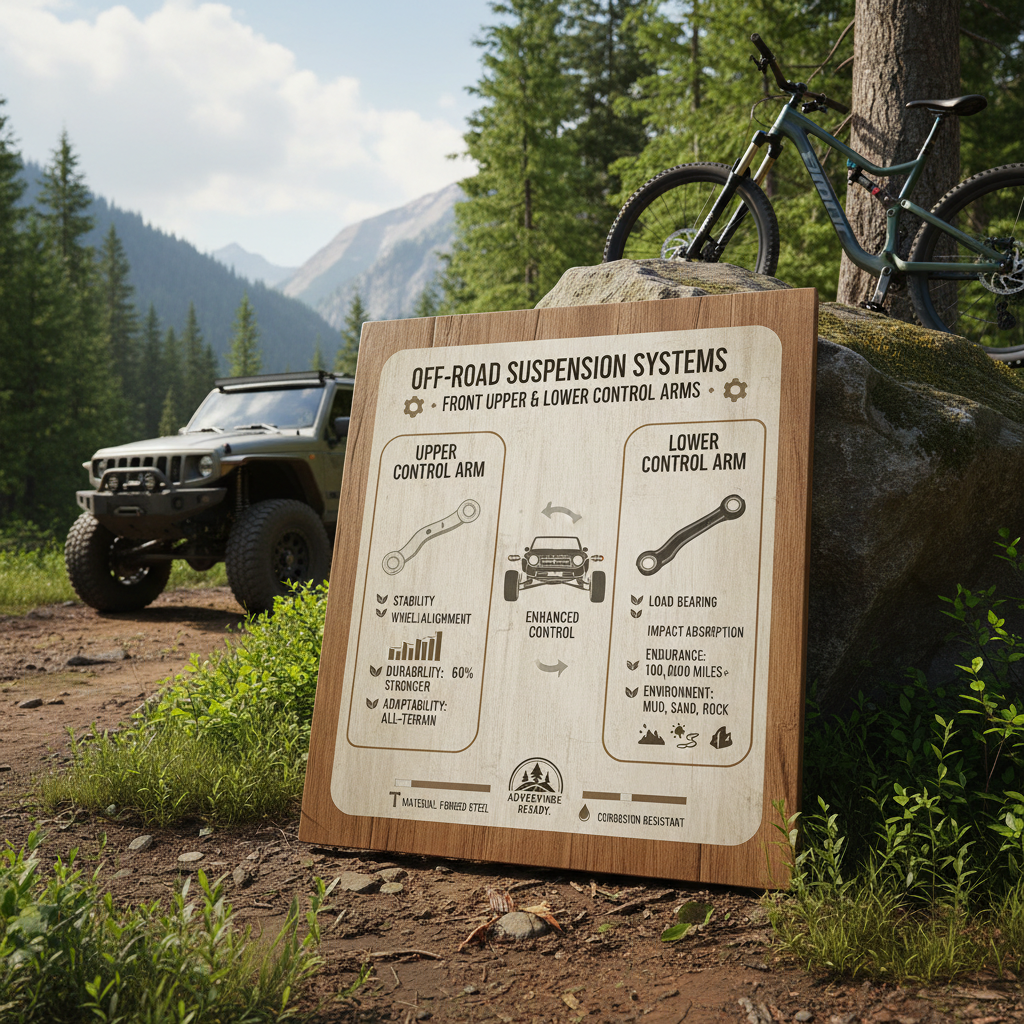
The Critical Role of Front Upper and Lower Control Arms in Vehicle Safety and Performance

The Importance of Front Upper and Lower Control Arms

The Critical Role of Front Upper and Lower Control Arms in Vehicle Safety and Performance

Let's be clear: the front upper and lower control arms are integral to vehicle safety and handling. They aren't just some add-on; they're a critical component of the suspension system. Without robust, properly functioning control arms, you’re inviting trouble. I’ve seen enough accidents traced back to failed control arm bushings to tell you it's a serious concern.

We deal with all kinds of vehicles, from light-duty pickups to heavy-duty commercial trucks. Each application demands specific control arm characteristics. It's not a one-size-fits-all situation. Factors like vehicle load capacity, intended use (on-road vs. off-road), and environmental conditions all dictate the type of control arm needed.

Global Relevance and Industry Context

The automotive industry is a global behemoth, with millions of vehicles manufactured and maintained worldwide every year. According to the International Organization of Motor Vehicle Manufacturers (OICA), global vehicle production exceeded 85 million units in 2023. That means a huge demand for suspension components, including front upper and lower control arms. And the need isn't just for new vehicles; the aftermarket for replacement parts is massive.

The challenges are increasing too. Modern vehicles are heavier, more complex, and subjected to more demanding driving conditions. The push for fuel efficiency also impacts suspension design, requiring lighter-weight yet durable materials. The rise of electric vehicles adds another layer of complexity, as the added weight from batteries places increased stress on suspension components.

Furthermore, stringent safety regulations worldwide are driving the demand for higher-quality, more reliable front upper and lower control arms. Manufacturers and repair facilities are under increasing pressure to ensure vehicle safety, and that starts with the foundation of the suspension system.

Defining Front Upper and Lower Control Arms

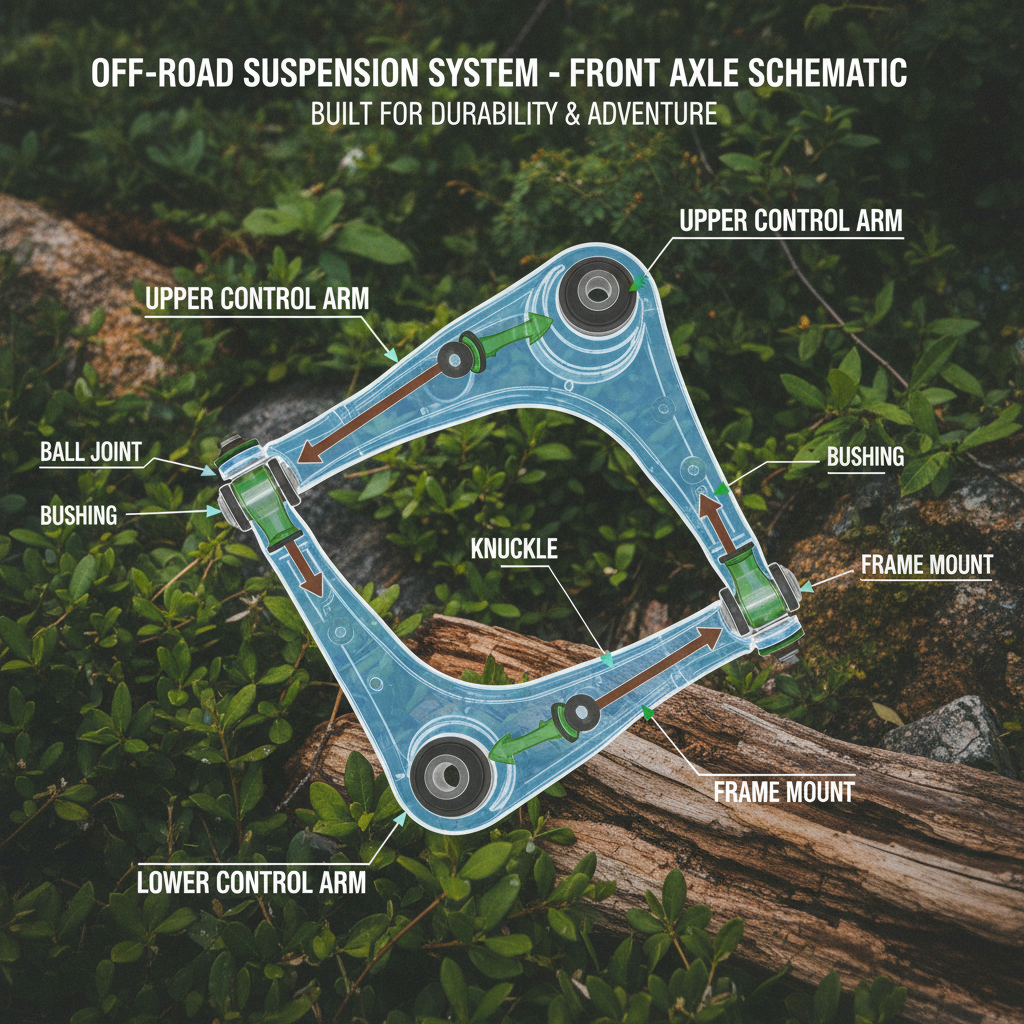
Simply put, front upper and lower control arms are the hinged suspension components that connect the vehicle’s wheels to its frame. They control the vertical movement of the wheel while allowing for steering. Think of them as the arms that allow the wheel to move up and down while maintaining control and stability.

Their connection to modern engineering is profound. Precise geometry and material science are essential for designing control arms that can withstand the stresses of daily driving and demanding conditions. We're talking about calculations involving vehicle weight distribution, center of gravity, and steering dynamics. It's not just bending metal; it's applied physics.

Their relevance extends beyond passenger vehicles, too. You'll find them in trucks, buses, and even specialized vehicles used in construction, agriculture, and mining. They are fundamental to maintaining vehicle stability and operator safety in these critical applications.

Key Factors: Durability, Performance, and Design

Durability is paramount. These parts have to withstand constant stress, corrosion, and impact. I’ve seen control arms fail prematurely due to cheap steel, poor welds, and inadequate rustproofing. Proper material selection – high-strength steel alloys and robust coatings – is non-negotiable.

Performance is tied to the bushing design. Bushings are the rubber or polyurethane components that isolate vibrations and allow for controlled movement. The right bushing material and geometry can significantly improve ride comfort, handling, and steering precision.

Control Arm Performance Metrics


Global Applications and Use Cases

From the bustling streets of Tokyo to the rugged terrains of Australia, front upper and lower control arms are essential components in vehicles across the globe. You’ll find them in everything from compact cars navigating urban environments to heavy-duty trucks hauling materials in remote mining operations.

In post-disaster relief operations, robust and reliable control arms are critical for ensuring that emergency vehicles can navigate challenging conditions and deliver aid effectively. The same holds true for agricultural applications where tractors and other machinery operate on uneven terrain.

Advantages and Long-Term Value

Investing in high-quality front upper and lower control arms translates to long-term cost savings. Fewer repairs, reduced downtime, and improved fuel efficiency all contribute to a lower total cost of ownership. It's a simple equation.

Beyond the economic benefits, there's the peace of mind that comes with knowing your vehicle is safe and reliable. That’s priceless. It's about protecting yourself, your passengers, and other road users. And frankly, it's about building trust in the vehicles we rely on every day.

Future Trends and Innovations

We're seeing a shift towards lighter-weight materials, like aluminum and composite materials, to improve fuel efficiency and handling. Advanced bushing designs are also emerging, incorporating new polymers and geometries to enhance ride comfort and reduce noise, vibration, and harshness (NVH).

Digital manufacturing and 3D printing are also starting to play a role, allowing for more customized and optimized control arm designs. And with the rise of autonomous vehicles, the demands on suspension components – including control arms – will only increase, requiring even greater precision and reliability.

Sustainability is also a growing concern. Manufacturers are exploring ways to reduce the environmental impact of control arm production, from using recycled materials to implementing more efficient manufacturing processes.

Analysis of Control Arm Selection Factors

Vehicle Type Load Capacity Terrain Conditions Control Arm Material
Passenger Car Low Paved Roads Steel Alloy
Light-Duty Truck Medium Mixed Terrain Forged Steel
Heavy-Duty Truck High Off-Road High-Strength Steel
Agricultural Tractor Very High Rough Terrain Reinforced Steel
Emergency Vehicle Medium Variable Aluminum Alloy
Electric Vehicle Medium to High Paved Roads Lightweight Alloy

FAQS

What is the typical lifespan of front upper and lower control arms?

The lifespan of front upper and lower control arms varies greatly depending on driving conditions, vehicle type, and maintenance. Generally, you can expect them to last between 50,000 to 100,000 miles. However, harsh conditions like off-road driving, salted roads, or frequent potholes can significantly shorten their lifespan. Regular inspection of the bushings and ball joints is crucial for identifying potential issues before they become major problems.

How do I know if my control arms need replacing?

Several symptoms can indicate failing control arms. These include clunking noises during turns or over bumps, uneven tire wear, steering wander, and vibrations in the steering wheel. A visual inspection can reveal cracked or damaged bushings, bent arms, or leaking ball joints. If you notice any of these signs, it's best to have a qualified mechanic inspect your vehicle immediately.

Are aftermarket control arms as good as OEM (Original Equipment Manufacturer) parts?

Not necessarily. OEM control arms are designed specifically for your vehicle and often undergo rigorous testing to ensure quality and performance. However, there are reputable aftermarket manufacturers that produce high-quality control arms that meet or even exceed OEM standards. It's crucial to research the brand and read reviews before purchasing aftermarket parts.

What is the importance of control arm bushings?

Control arm bushings are vital for absorbing vibrations and allowing for controlled movement of the suspension. They play a critical role in ride comfort, handling, and steering precision. Worn or damaged bushings can cause excessive play in the suspension, leading to instability and poor handling. Replacing bushings can often restore the original performance of the control arms.

Can I replace control arms myself, or should I hire a professional?

Replacing front upper and lower control arms can be a complex task requiring specialized tools and knowledge. While experienced DIYers can tackle the job, it's generally recommended to have a professional mechanic perform the replacement, especially if you're unfamiliar with suspension work. Incorrect installation can compromise safety and handling.

What materials are control arms typically made from?

Control arms are commonly made from steel alloys, offering a good balance of strength and affordability. For higher-performance applications or weight reduction, aluminum alloys are sometimes used. High-strength steel is often found in heavy-duty applications where durability is paramount. The bushings can be made from rubber, polyurethane, or other composite materials.

Conclusion

In short, front upper and lower control arms are far more than just simple components. They are foundational to vehicle safety, performance, and long-term reliability. Understanding their importance, the factors that influence their durability, and the emerging trends in their design is crucial for anyone involved in the automotive industry. Don’t skimp on these – they’re not a place to cut corners.

Looking ahead, we’ll see continued innovation in materials, design, and manufacturing processes, driven by the demand for lighter, stronger, and more sustainable control arms. Investing in quality control arms and prioritizing regular maintenance is an investment in safety, peace of mind, and a smoother ride for years to come. To learn more about quality control arms and find the right solution for your vehicle, visit our website at www.lkcontrolarm.com.


Daniel Garcia

Daniel Garcia

Daniel Garcia is a Market Research Analyst for Hebei Lingke Vientiane, focusing on trends within the US automotive parts market. He analyzes sales data, competitor activity, and customer preferences to identify opportunities for growth. Daniel utilizes his research to provide insights into emerging market segments and inform product development. He
Previous The Critical Role of Front Upper Control Arms in Vehicle Performance and Safety
Next Understanding the Critical Role of the Front Left Control Arm in Vehicle Performance