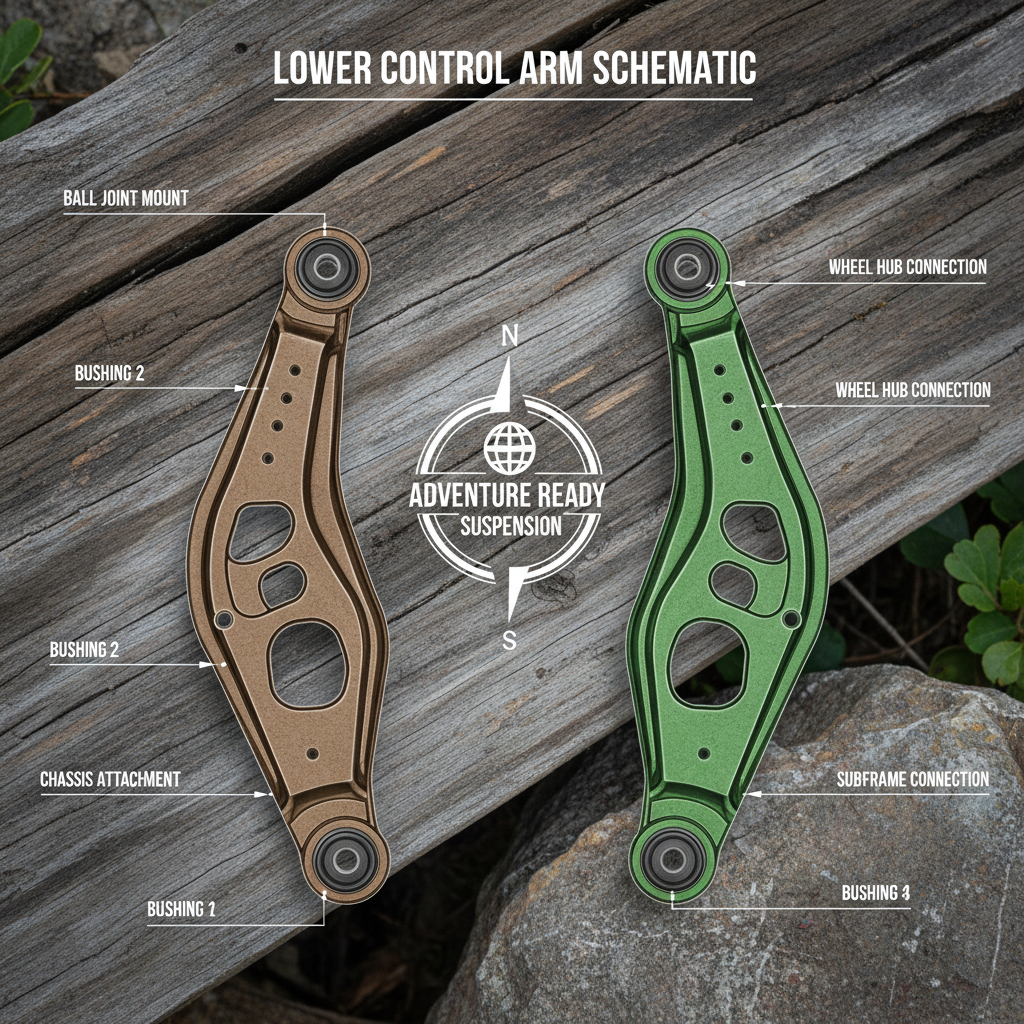
When a vehicle begins to experience unexplained vibrations in the drivetrain or a noticeable shift in alignment, the root cause often lies in the degradation of critical rubber-to-metal interfaces. These components, specifically the supports and bushings, act as the primary dampers between the high-torque output of the engine and the rigid chassis of the car.
The precision required for drivetrain stability is immense; even a few millimeters of misalignment in a drive shaft support can lead to accelerated wear of the universal joints and potential transmission failure. This creates a significant challenge for fleet managers and repair shops who must balance the need for high-durability materials with the cost-efficiencies of large-scale procurement.
Understanding the technical nuances of a china bushing or support bracket is essential for maintaining vehicle longevity and safety, particularly when sourcing components for a wide range of global automotive brands.


The drive shaft support is not merely a holder but a critical stabilizer. Located typically near the center of the drivetrain, it ensures that the rotating shaft maintains a concentric path. By securing the shaft, the support prevents excessive flexing or "whipping" that occurs at high rotational speeds, which would otherwise result in catastrophic failure of the drivetrain.
From a technical standpoint, these supports must manage both radial and axial loads. Using durable materials like steel or aluminum for the housing and high-grade rubber for the insert, the support allows for minute adjustments in alignment as the vehicle body moves during suspension travel, ensuring power is transferred from the engine to the wheels without energy loss.
The effectiveness of a china bushing depends heavily on the chemical composition of the elastomer used. Natural rubber is often preferred for its superior elasticity and resilience compared to synthetic alternatives. The primary objective is to create a material that resists ozone degradation, oil exposure, and thermal cycling while maintaining its Shore hardness over thousands of operational hours.
Manufacturing processes, such as vulcanization, are critical in determining the final properties of the part. A precise cure cycle ensures that the rubber bonds permanently to the metal sleeve, preventing the "slipping" effect often seen in lower-quality aftermarket parts. This bonding is what allows the component to absorb shocks and dampen high-frequency vibrations, particularly when navigating rough or uneven terrain.
Furthermore, the integration of high-quality natural rubber ensures that the part does not rub off on hands or degrade prematurely. This material stability is a key indicator of a product's lifespan, as it prevents the rubber from hardening or cracking under the stress of constant compression and torsion.
When a drive shaft support fails, the symptoms are often subtle before becoming severe. It usually begins as a slight shudder during acceleration, which progresses into a persistent vibration throughout the cabin. This happens because the shaft is no longer perfectly centered, causing an imbalance in the rotational force.
Drivetrain misalignment is a cumulative failure process; a worn rubber support leads to increased vibration, which then accelerates the wear of the transmission seals and universal joints, eventually causing a total system disconnection.
Preventing this cascade requires rigorous inspection of the rubber inserts. Once the rubber loses its compression set or begins to tear, the stability of the entire drivetrain is compromised. Replacing these parts proactively is the only way to protect the more expensive components of the powertrain from premature fatigue.
Measuring the performance of a support bracket requires analyzing its ability to reduce Noise, Vibration, and Harshness (NVH). The efficiency of the dampening is determined by the rubber's capacity to convert kinetic energy from vibrations into low-level heat, thereby isolating the chassis from the drivetrain's mechanical noise.
Different materials provide varying levels of isolation. While stiffer rubbers might offer better alignment stability for heavy-duty vehicles, softer, high-quality natural rubbers provide the comfort and silence expected in passenger vehicles. The following index illustrates the relative performance of various material grades across key evaluation metrics.
The versatility of these components is seen in their application across diverse automotive platforms. For instance, the structural requirements for a Ford control arm differ significantly from those of a Toyota or Lexus system. Each brand utilizes specific OE specifications—such as OE NO.37230-35130—to ensure that the drive shaft support matches the exact weight and torque profile of the vehicle's drivetrain.
In a typical industrial setting, such as a large-scale automotive repair center, the focus is on precision fitment. Using components that are tailored for specific models—including Hyundai, Kia, Mitsubishi, or Opel—prevents the installation errors that often lead to premature part failure. The ability to produce parts according to technical drawings or samples allows manufacturers to maintain these strict tolerances.
Global automotive procurement has shifted toward integrated supply chain management to reduce intermediate commissions and ensure quality consistency. The focus has moved from simply finding the lowest price to identifying manufacturers with their own production bases, which allows for better control over material quality and delivery timelines.
Hebei, China, has emerged as a significant hub for this manufacturing, with facilities specializing in rubber-to-metal bonding. By leveraging advanced material control technology and a production capacity of millions of pieces per year, these factories can serve a wide array of international markets, including the US, Peru, Australia, and Turkey, without compromising on OE standards.
The trend is now toward "direct-from-factory" models, where importers act as purchase offices. This ensures that the final product—whether it is a brake arm for a BMW or a support for a Volkswagen—is produced using high-quality natural rubber rather than cheap fillers, ensuring a longer operational lifespan for the end consumer.
Selecting the right replacement component requires a balance between material durability, fitment precision, and cost. Buyers often face a trade-off between generic "universal" parts and model-specific components. Generic parts may offer lower initial costs but often lead to higher long-term expenses due to frequent replacements and secondary drivetrain damage.
A professional decision framework involves evaluating the rubber's resistance to environmental stressors and the manufacturer's ability to provide customized packaging or sample validation. Verifying the production capacity and the manufacturer's history with major German and Japanese car brands provides a reliable indicator of the part's stability.
The following table provides a comparative analysis of selection factors to help procurement officers and technicians make informed decisions.
| Evaluation Factor | Premium Natural Rubber | Synthetic Elastomer | Low-Cost Aftermarket |
|---|---|---|---|
| Vibration Absorption | Excellent | Moderate | Poor |
| Lifecycle Duration | High (Long-term) | Medium | Low (Short-term) |
| Fitment Precision | OE-Matched | Approximate | Variable |
| Thermal Resilience | Stable | High | Low |
| Environmental Cost | Moderate | High | Low |
| Recommended Use | High-mileage/Fleet | Specialized Industrial | Temporary Repair |
The most common indicator is an unusual vibration or humming noise that increases with vehicle speed. Physically, you may notice cracks or tears in the rubber insert, or a gap between the rubber and the metal sleeve. If the vehicle feels "loose" during acceleration or deceleration, it is a strong sign that the support is no longer securing the shaft correctly.
Natural rubber generally offers superior elasticity and a better "memory" effect, meaning it returns to its original shape more effectively after compression. This results in better vibration dampening and a longer lifespan under the constant stress of automotive suspension cycles, whereas cheap synthetic rubbers often harden and crack prematurely.
The Original Equipment (OE) number, such as 37230-35130, ensures that the replacement part matches the exact dimensions, hardness, and fitment of the original factory part. Using the OE number eliminates guesswork and prevents the installation of parts that may be slightly off-size, which could otherwise introduce new vibrations into the drivetrain.
Yes, professional manufacturers can produce components based on technical drawings or physical samples. This process involves building custom molds and fixtures to ensure the new part meets the specific geometric and material requirements of the vehicle, which is essential for rare or modified automotive platforms.
Depending on the order quantity and whether the items are in stock, delivery generally ranges from 5 to 30 days. Stocked items can often be shipped within a week, while custom production runs typically require 15-20 days for manufacturing and quality control checks before shipping via carton or pallet.
The location is less important than the facility's capabilities. For example, manufacturers in Hebei, China, who operate their own production bases and utilize advanced material control, can offer high-quality parts at a lower cost by removing intermediate layers, provided they adhere to strict OE quality standards and use premium natural rubber.
Maintaining the integrity of the drivetrain relies on the smallest but most stressed components: the rubber supports and bushings. By prioritizing material quality—specifically high-grade natural rubber—and ensuring exact OE fitment, vehicle owners and fleet managers can prevent costly transmission failures and ensure a smooth, vibration-free driving experience.
As the industry moves toward more direct sourcing models, the ability to partner with factories that possess both technical expertise and large-scale production capacity is key. Investing in precision-engineered components today is the most effective strategy for reducing long-term maintenance costs and extending the operational life of the vehicle.